With diesel fuel prices at exceptionally high levels, getting the most out of every litre matters. For heavy-duty trucks and equipment, even a small loss in fuel efficiency can quickly add up to higher operating costs.
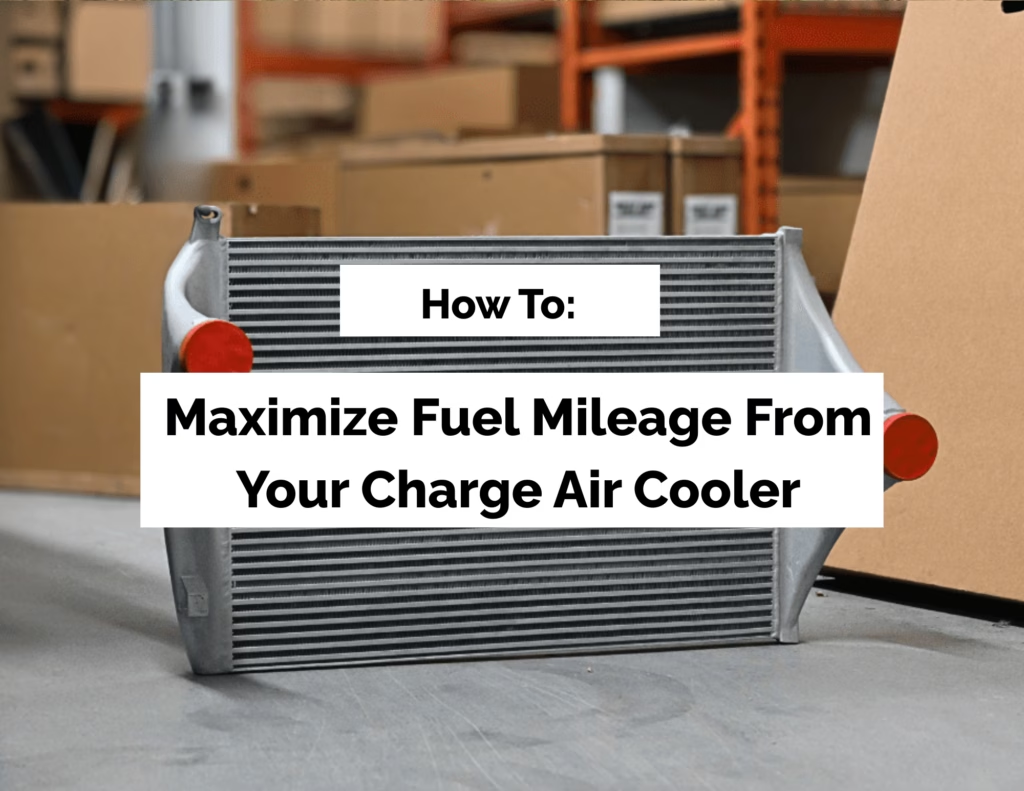
One component that can have a major impact on engine performance and fuel consumption is your charge air cooler (CAC).
A properly functioning CAC helps your engine operate at peak efficiency by cooling compressed air and maintaining boost pressure.
When a CAC develops a leak, that boost pressure can escape, forcing your engine to work harder and potentially burn more fuel to produce the power you need.
So, how do you know if your charge air cooler is leaking? And should you repair it or replace it?
This guide breaks down the signs of a leaking charge air cooler, how it can impact your fuel mileage and what you can do about it.
What Is a Charge Air Cooler (CAC)?
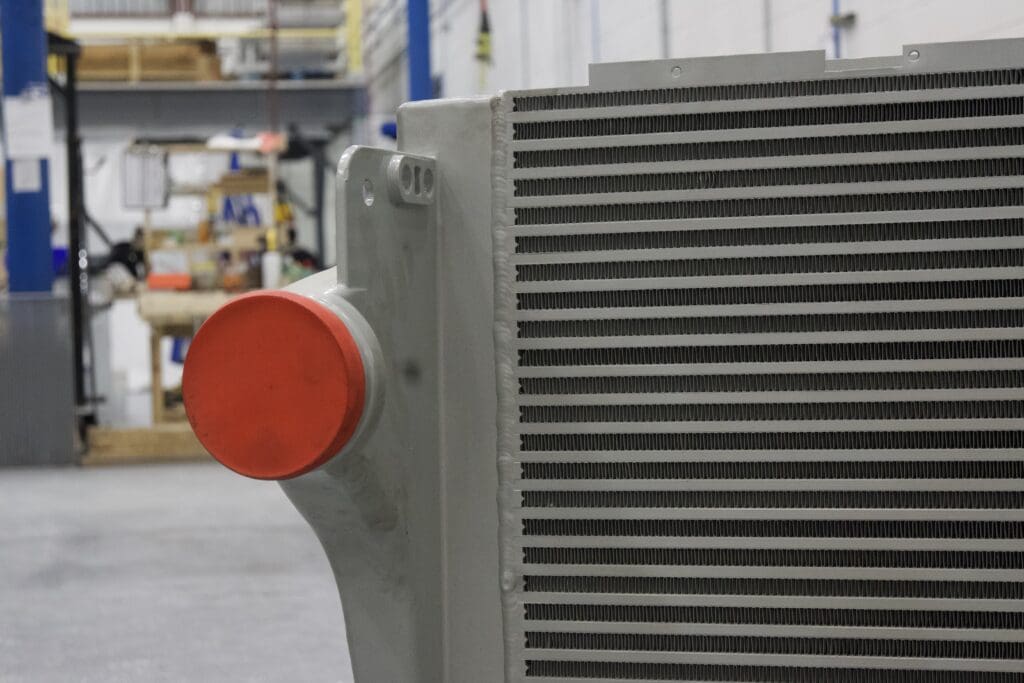
A charge air cooler (CAC) is an important component of a turbocharged engine. Its job is to cool the compressed air coming from the turbocharger before that air enters the engine.
When a turbocharger compresses air, the air heats up. The CAC reduces its temperature, helping provide cooler, denser air for combustion. This helps your engine maintain power, fuel efficiency and overall performance.
A CAC also needs to maintain boost pressure throughout the system. If a crack, damaged tube or another leak allows pressurized air to escape, the engine may not receive the amount of air it needs for efficient combustion. The result can be a loss of power and increased fuel consumption.
At West End Radiators, we carry an extensive inventory of aftermarket CACs for heavy-duty applications. We can also manufacture custom CACs for applications where a standard replacement isn’t the right fit.
How Do You Know If Your Charge Air Cooler Is Leaking?
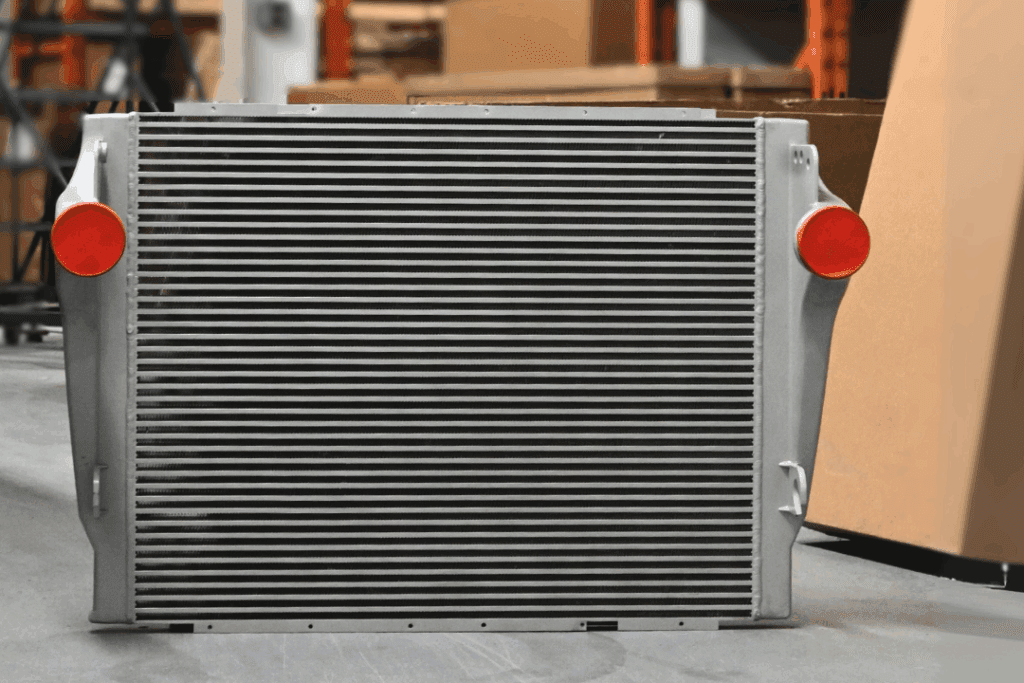
There are several signs that a CAC may have developed significant leaks. Here’s a few things to look out for:
- Loss of engine power
- Increased fuel consumption
- Increased exhaust smoke
- High soot levels in engine oil
- Premature piston, ring or valve failure
- Turbocharger and/or exhaust manifold problems
- Elevated operating temperatures
Because some CAC leaks can be difficult to see, a pressure test is one of the best ways to determine whether your charge air cooler is holding pressure properly.
If you suspect a leak, having your CAC tested can help you catch the problem before it leads to higher fuel costs or additional engine problems.
If a pressure drop test on a CAC at 30 psi shows a loss of 5 psi in 15 seconds, the CAC is defective and must be repaired or replaced.
What Happens If You Keep Driving With a Leaking CAC?
You may be able to continue operating with a small CAC leak, but that doesn’t mean you should ignore it.
A leak allows some of the compressed air produced by your turbocharger to escape before reaching the engine. This loss of boost pressure can reduce engine performance and force the engine to work harder to produce the power you need.
Over time, a leaking CAC may contribute to:
- Reduced engine power
- Poorer fuel economy
- Increased exhaust smoke
- Higher operating costs
- Additional strain on your turbocharger and other engine components
The longer the leak goes unnoticed, the more fuel you may be wasting.
With the amount heavy-duty equipment consumes every day, even a relatively small drop in fuel efficiency can become a significant operating expense over the course of a year.
How Much Can a Leaking Charge Air Cooler Cost You in Fuel?

A leaking CAC can increase fuel consumption by preventing your engine from operating as efficiently as it should.
Here’s an example to put that into perspective.
Here’s an example to put that into perspective:
- Say your semi-truck averages 36.187 litres per 100 km.
- On average, you travel 965.6 km per day, with diesel costing $2.50/L.
- With a properly functioning CAC, you would spend approximately $873.58 per day on fuel.
Now, if your CAC is leaking and your fuel consumption increases by 6.15%:
- Your daily fuel costs could increase by approximately $53.73.
- If you operate 25 days per month, that’s an additional $1,343.25 per month in fuel costs.
- Over the course of a year, that adds up to approximately $16,119 in additional fuel costs.
That means a leaking CAC could potentially cost you thousands of dollars in unnecessary fuel costs every year.
Do You Have to Replace a Leaky Charge Air Cooler?
Not necessarily.
Finding a leak doesn’t automatically mean you need a brand-new charge air cooler. Whether your CAC should be repaired or replaced depends on factors such as the location and severity of the leak, the condition of the core and the overall condition of the unit.
A small, repairable leak on an otherwise good CAC may not justify replacing the entire unit. However, if the CAC has extensive damage, multiple leaks or deterioration throughout the core, replacement may be the more cost-effective long-term solution.
That’s why we recommend having the CAC inspected and pressure tested before deciding what to do next.
Can a Leaking Charge Air Cooler Be Repaired?
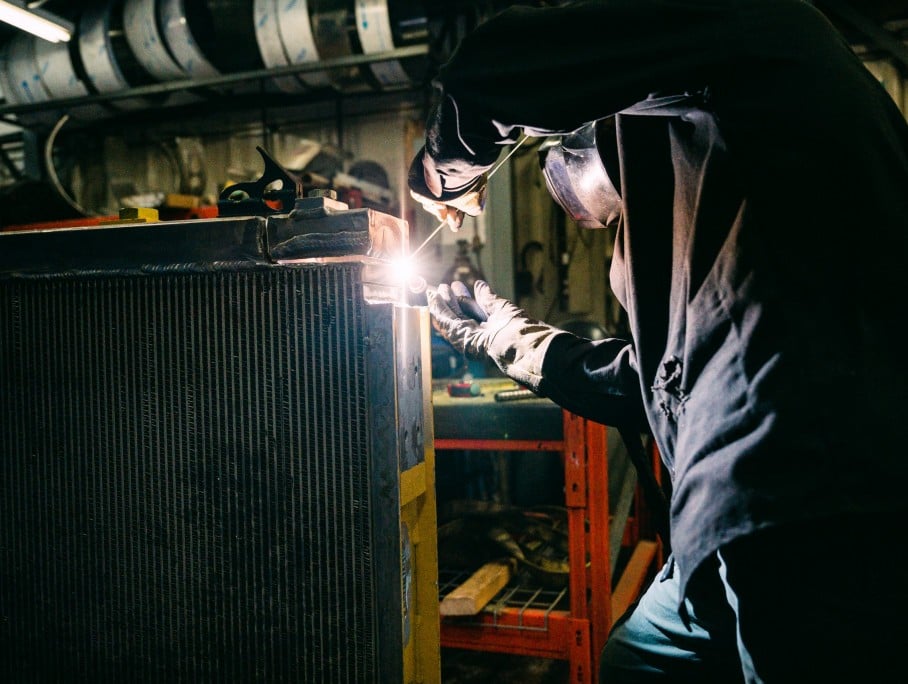
Yes, in many cases a leaking charge air cooler can be repaired.
The best repair method depends on where the CAC is leaking and how much damage has occurred. Our team can pressure test the charge air cooler to locate leaks and assess its overall condition.
If the CAC can be repaired reliably, repairing it may help extend its service life without the cost of a complete replacement.
If the damage is too extensive to make a repair worthwhile, we can help you find an aftermarket replacement or manufacture a custom CAC for your application.
Aftermarket vs. OEM Charge Air Coolers
If your CAC does need to be replaced, you don’t necessarily have to go back to an OEM replacement.
Aftermarket charge air coolers can provide a cost-effective alternative to OEM units, and some aftermarket CACs can be designed specifically for demanding heavy-duty applications.
Depending on the application, an aftermarket CAC may also offer options such as custom construction, different core designs or other modifications designed around the conditions your equipment operates in.
The right choice ultimately depends on your equipment, operating environment and budget.
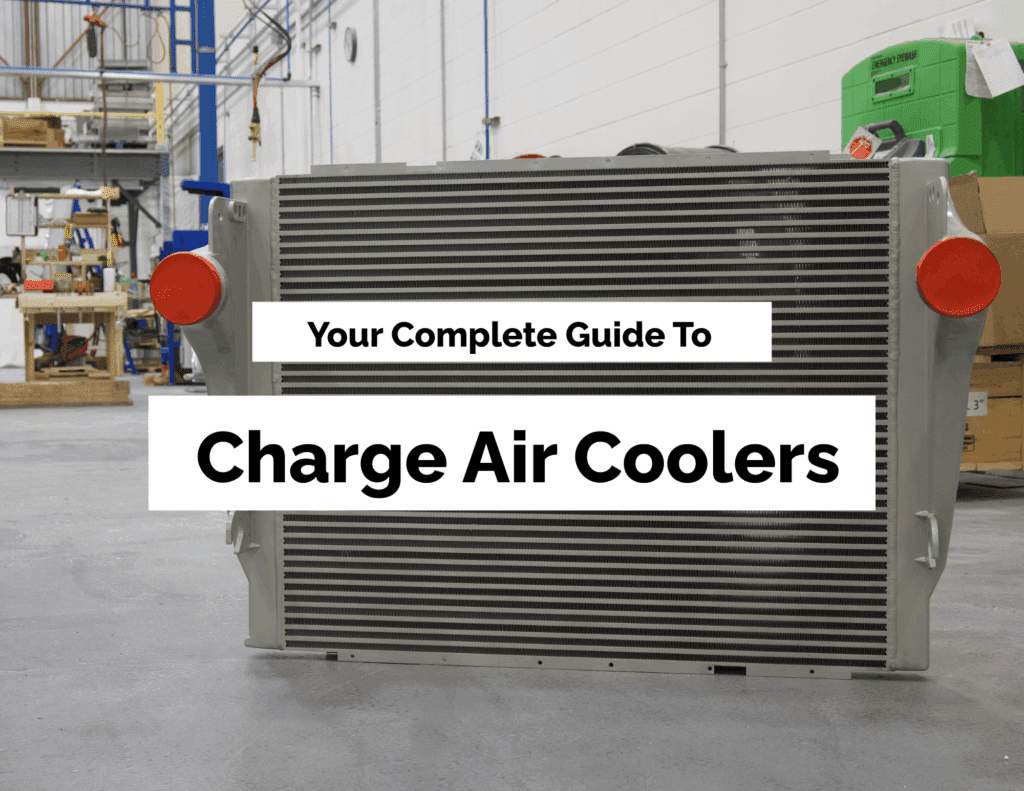
Want a deeper comparison? Check out our complete Aftermarket Charge Air Cooler Guide to learn more about aftermarket CAC replacements, how they compare to OEM options and what to consider when choosing one.
High Quality Aftermarket Charge Air Coolers In Western Canada
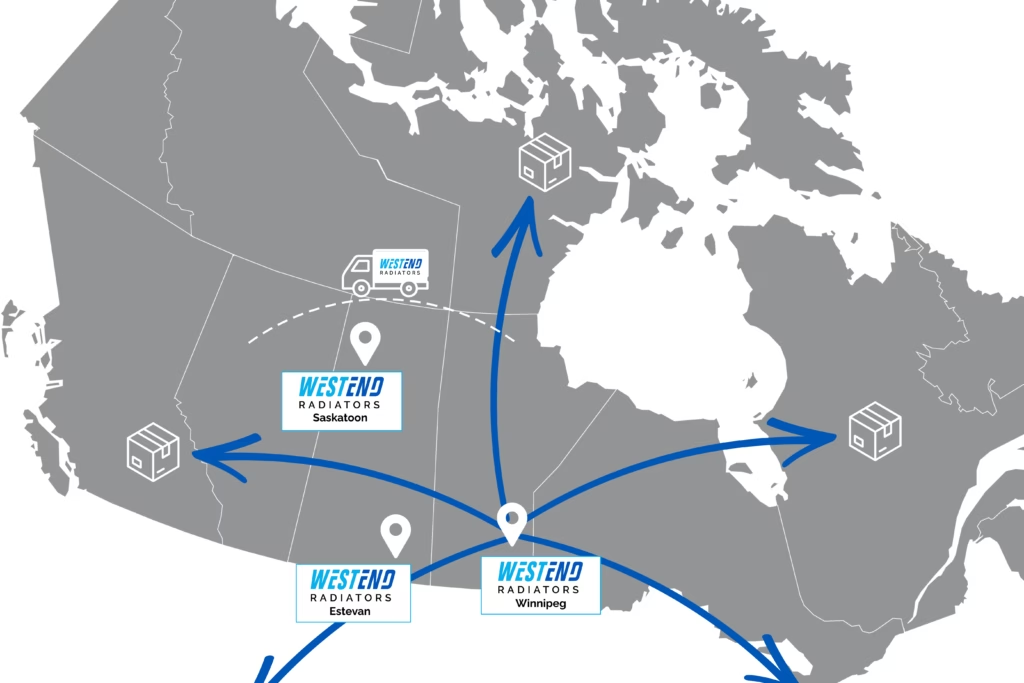
We are proud to serve radiator shops, fleet owner-operators and small to medium sized mechanic shops across Western Canada.
Our custom, high-quality aftermarket charge air coolers can be customized to meet your work extremes. You can rely on our dedicated team to provide you with top-quality CAC replacements that meet your exact needs.
Curious about what aftermarket charge air coolers are available in Western Canada? Contact our team for more information.
Toll-free: 1-877-RAD-CORE (723-2673)
Winnipeg: 1-204-633-5648
Estevan: 1-306-634-2055
Saskatoon: 1-306-934-7005